

One-Third of Jewish Workers in Secular Nonprofits Considered Leaving Their Jobs According to New Report

This is a critical moment for secular nonprofits to lead with clarity, integrity, and a commitment to true inclusion
Nonprofits can model what courageous, nuanced, values-driven leadership looks like. Addressing antisemitism is not separate from building inclusive workplaces; it is an integral part of it.”
SAN FRANCISCO, CA, UNITED STATES, January 8, 2026 /EINPresswire.com/ -- A new report released by Blue Compass reveals the profound and worsening challenges facing Jews working in secular nonprofit organizations across the United States. The findings point to a sector struggling to recognize, prevent, and respond to anti-Jewish behaviors and practices at a time when Jewish employees are reporting widespread bias, isolation, and a lack of institutional support. Jewish Americans are 4% of the nonprofit workforce despite representing just 2.4% of the U.S. population. — Sharon Leslie, Founding Executive Director of Blue Compass
Blue Compass, a new organization set to launch in 2026, is dedicated to providing resources and peer support to individuals with Jewish heritage or connection who work in secular nonprofits. Blue Compass will also provide resources and referrals to employers seeking to address concerns and promote greater inclusivity in their workplace. As part of its launch, Blue Compass will host its first affinity gathering of these professionals in New York City in late January, with another to follow on the West Coast in February.
To better understand current workplace dynamics, Blue Compass surveyed 150 Jews working in secular nonprofits. The results, reported in “Jewish Professionals in Secular Nonprofits,” found:
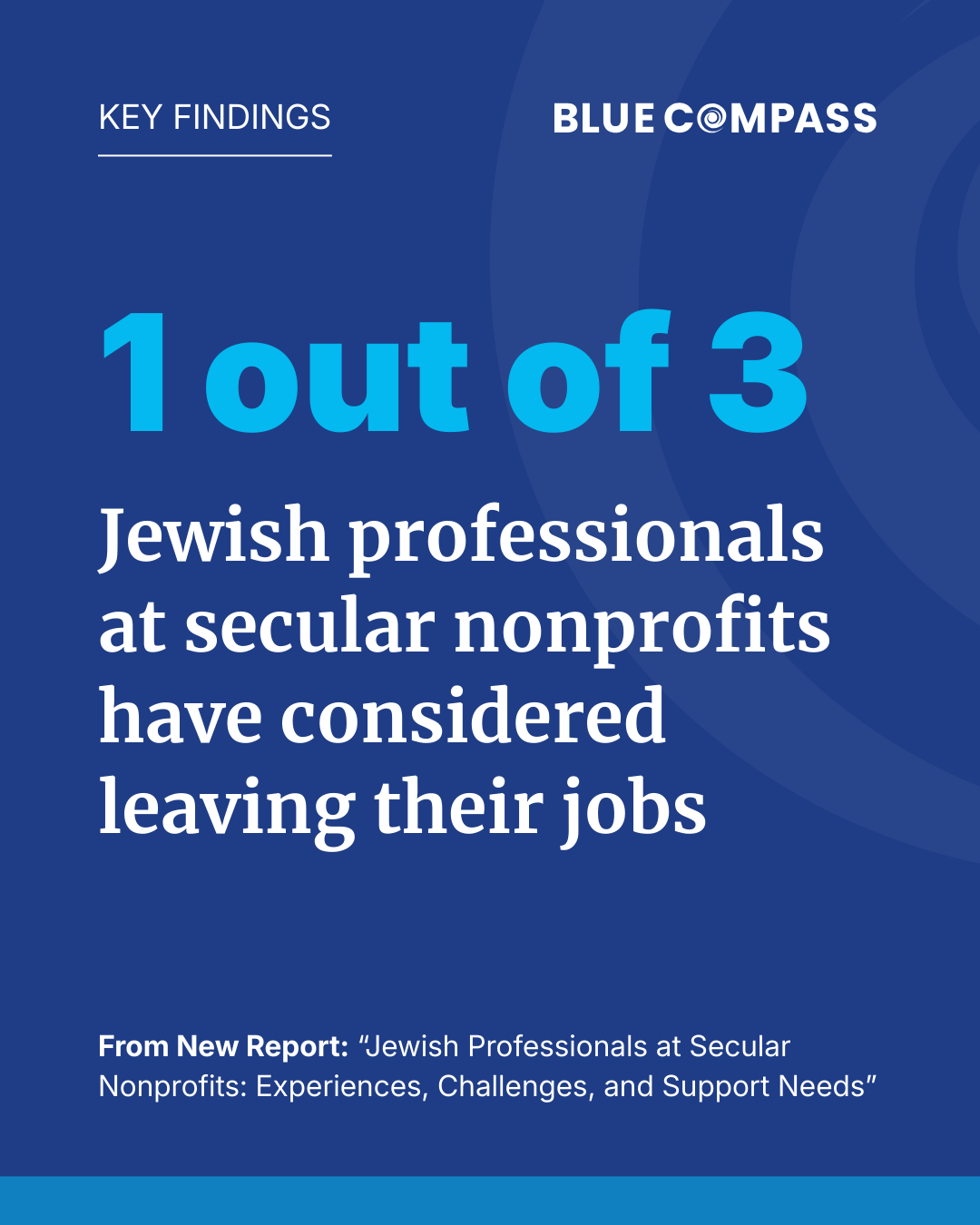
- One-third (34.5%) of respondents have considered leaving their job as a result of their experience as a Jew in the workplace.
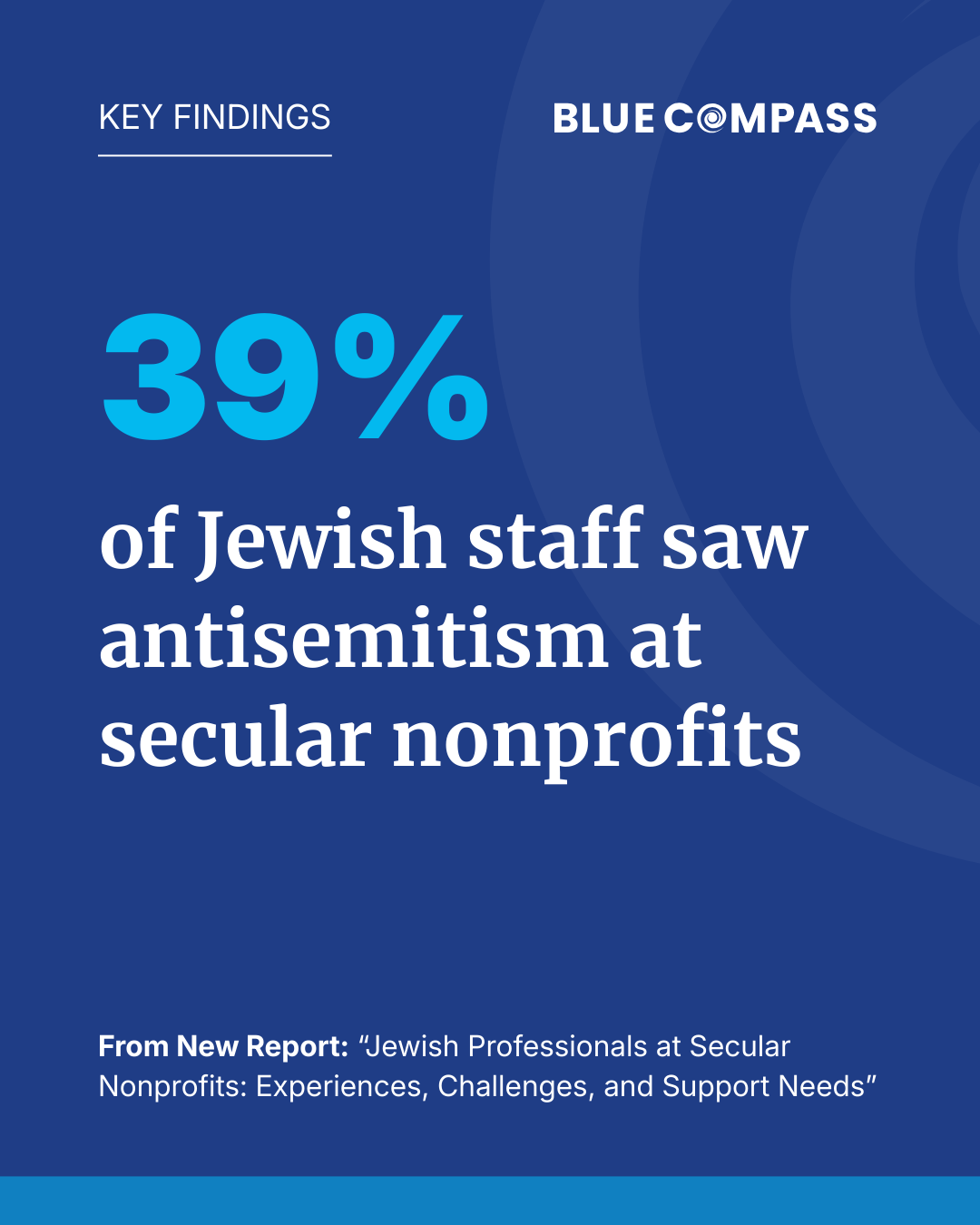
- Nearly 40% have witnessed antisemitic statements or behavior at work over the past year.
- 41% feel uncomfortable expressing Jewish identity at professional events; 33% feel this discomfort even at their own workplace.
- Just 12% believe their organization provides tools or support to address antisemitism.
For generations, Jews have played essential roles in civil rights, social justice, philanthropy, and community health. Yet the report shows that many now encounter antisemitism, anti-Jewish bias, and hatred that is dismissed, misunderstood, or minimized, leaving them feeling pressure to hide or downplay their Jewish identity or affinity.
“Behind the data are real people facing real threats who care deeply about their organizations’ missions but are struggling with isolation, bias, and a lack of institutional backup. No one should have to navigate that alone,” said Sharon Leslie, Founding Executive Director of Blue Compass, and a longtime nonprofit and philanthropy leader.
She added, “The people who show up every day to strengthen their communities and solve local and global challenges deserve workplaces that are equipped to support them, not environments where antisemitic bias is brushed aside or misunderstood. This report is a call to take a different, constructive, and more collaborative approach to help nonprofit leaders listen openly and respond with intention.”
In the wake of October 7 and the war that followed, Ariel Amaru, then at a prominent national women’s rights organization, did not face overt slurs but a steady drip of microaggressions and ideological litmus tests. Colleagues often crossed from criticizing Israeli policy into antisemitic tropes and assumed she must be anti-Zionist because she is Black. A turning point came when her union leadership, without consulting members, signed a campus encampment solidarity letter laden with language she felt crossed from policy critique into antisemitism, prompting her and two other Jewish women to leave the union.
“It wasn’t one big incident,” Amaru says. “It was the pressure of constantly feeling like I had to address inappropriate comments that veered from critiques of the Israeli government into antisemitism. It was incredibly isolating to feel like I had to choose between parts of my identity or hide being Jewish to belong.” Facing the constant burden of educating colleagues or navigating demands for ideological conformity ultimately pushed her to leave and dedicate her work to confronting antisemitism in progressive spaces.
"Blue Compass is here to support Jewish professionals to stay in their jobs and continue their mission-driven work in secular nonprofits, explained Jill Blair, an advisory board member at Blue Compass. "We hope to do this in partnership with the nonprofits themselves by raising their consciousness and increasing their sensitivity to how anti-Jewish bias is creeping into and causing disruption within the workplace. In a sector that defines itself by the values of decency, fairness, and justice for all, there is no room for intolerance or bias of any kind. Full stop."
Despite these challenges, the report also highlights a strong desire to stay in the sector and to build healthier, more informed workplaces. Respondents expressed strong demand for meaningful support networks, vetted educational resources, crisis management tools, and opportunities for constructive dialogue across differences.
“This moment is difficult, but it is also an opportunity,” Leslie added. “Nonprofits can model what courageous, nuanced, values-driven leadership looks like. Addressing antisemitism is not separate from building inclusive workplaces; it is an integral part of it.”
Blue Compass will launch its national affinity network and regional cohorts in early 2026. The initiative will bring together Jewish professionals from across the secular nonprofit sector for peer connection, training, and collective action, while also offering practical tools and resources for nonprofit CEOs, Boards of Directors, and organizations.
To learn more or sign up for updates, visit bluecompassnetwork.org.
###
About Blue Compass
Blue Compass was founded to empower Jewish professionals to combat antisemitism in nonprofits by building critical support systems, enhancing sector resilience, and acting collectively to make change. Through peer networks, practical tools, bridge-building frameworks, and partnerships with leading organizations, Blue Compass helps Jewish professionals and the nonprofits they serve navigate complex environments with integrity, connection, and courage. In early 2026, Blue Compass will launch its national affinity network and resource hub for Jewish professionals working in secular nonprofits.
Dan Cohen
FCP
+1 510-465-8294
email us here
Legal Disclaimer:
EIN Presswire provides this news content "as is" without warranty of any kind. We do not accept any responsibility or liability for the accuracy, content, images, videos, licenses, completeness, legality, or reliability of the information contained in this article. If you have any complaints or copyright issues related to this article, kindly contact the author above.
